
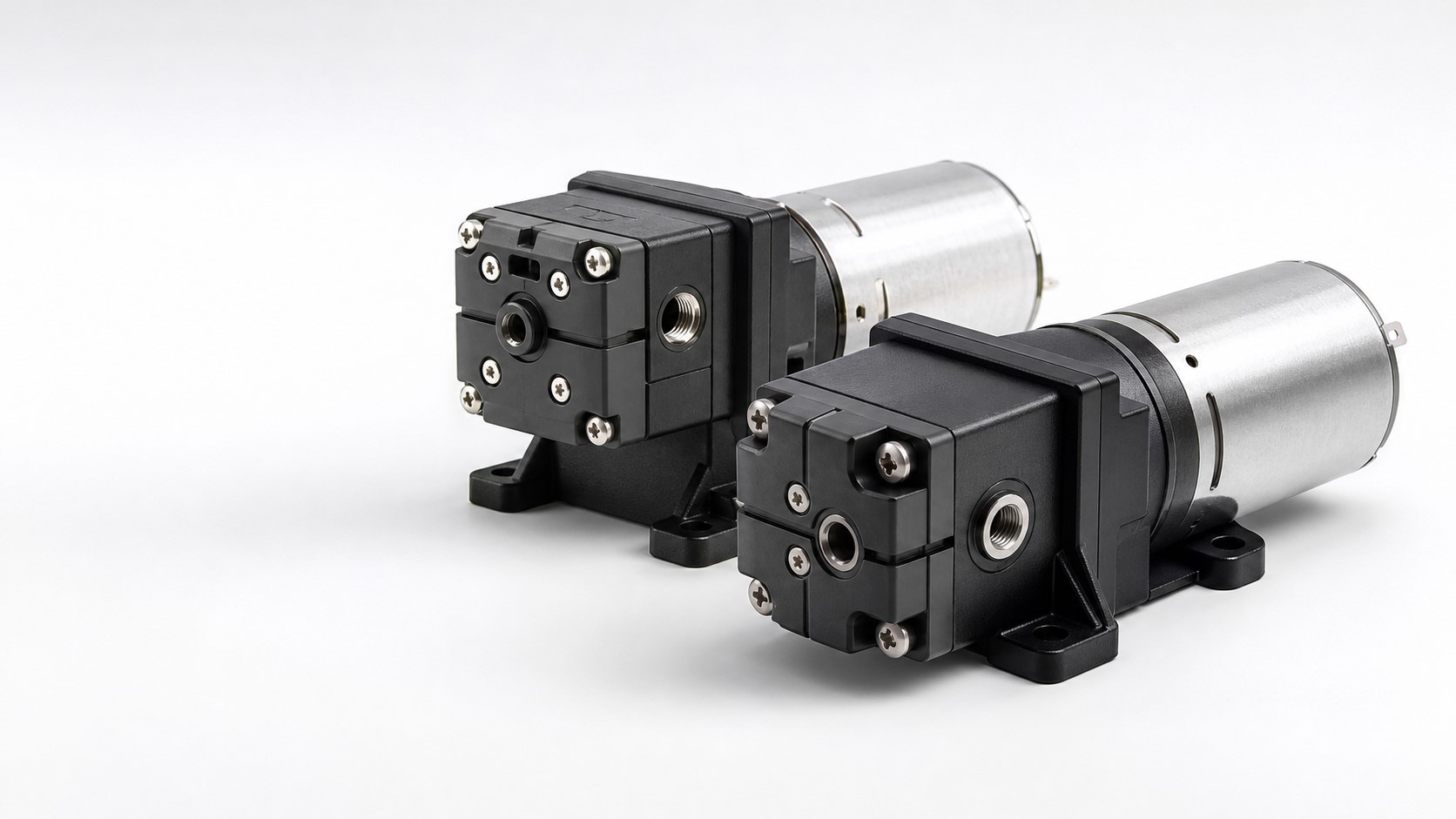
Start with media isolation and working point
A diaphragm pump separates the media path from the drive side and is often preferred when clean air, gas sampling, liquid handling or oil-free transfer is important. A piston pump can be attractive where pressure, compact size or a specific pneumatic response is the main driver.
The comparison should be made at the required flow with actual pressure or vacuum, not by reading catalog maximums. Valve design, motor choice and chamber volume can change the result within the same pump family.
Check noise, pulsation and life in the system
Both technologies can create pulsation. The effect depends on downstream volume, hose elasticity, valve timing and whether the control system samples pressure or flow during pump strokes.
Run comparison tests in the final bracket and enclosure. A platform that looks better on a bare bench may lose advantage once the structure amplifies vibration or restricts heat flow.
Frequently asked questions
Is a diaphragm pump always quieter than a piston pump?
Not always. Noise depends on motor speed, load, mounting, enclosure resonance and air-path treatment, so it should be measured in the final system.
Related products and engineering resources
Continue with the products, application material and engineering support related to this topic, or submit project conditions for a selection review.