
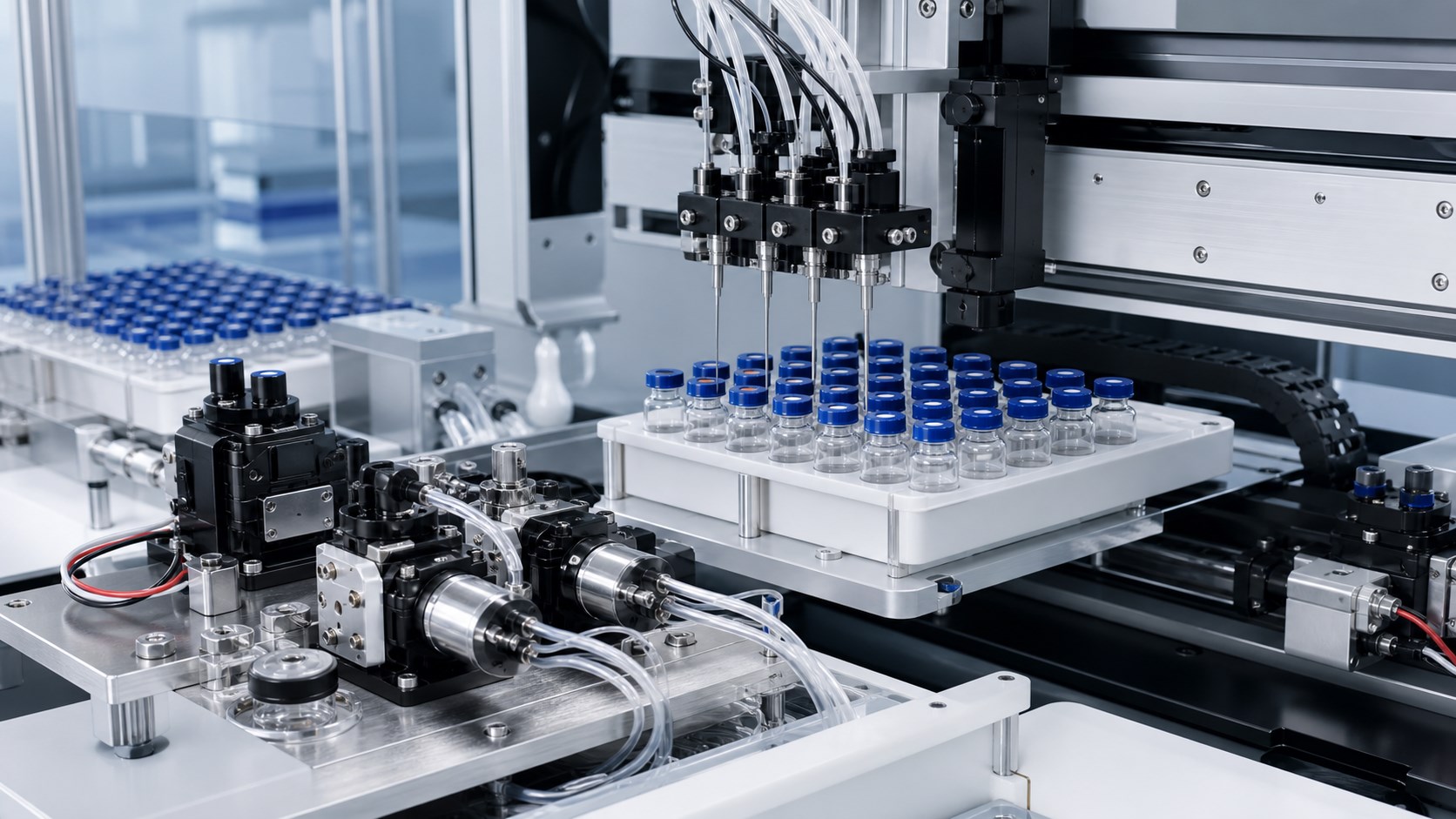
Classify the pump role before choosing technology
A laboratory automation system may use one pump for reagent transfer, another for waste aspiration and another for air or vacuum control. Each role has a different success metric: volume consistency, contamination control, response time, or tolerance to bubbles and residue.
Write the pump requirement in the same language as the assay or workflow: volume per step, acceptable carryover, reagent temperature, priming time and daily cycle count.
Keep service access in the selection decision
Small instruments often hide pumps behind reagent trays, heaters or optical modules. If tubing, filters or dampers cannot be replaced easily, a technically correct pump may still create field-service cost.
During layout review, reserve bend radius, clamp access and a clean path for any fluid that may leak during service. These mechanical details protect both measurement repeatability and maintainability.
Frequently asked questions
Which pump type is best for laboratory automation?
There is no single best type. Select by the pump role, media, required flow or volume, contamination risk, back pressure, noise and service strategy.
Related products and engineering resources
Continue with the products, application material and engineering support related to this topic, or submit project conditions for a selection review.