
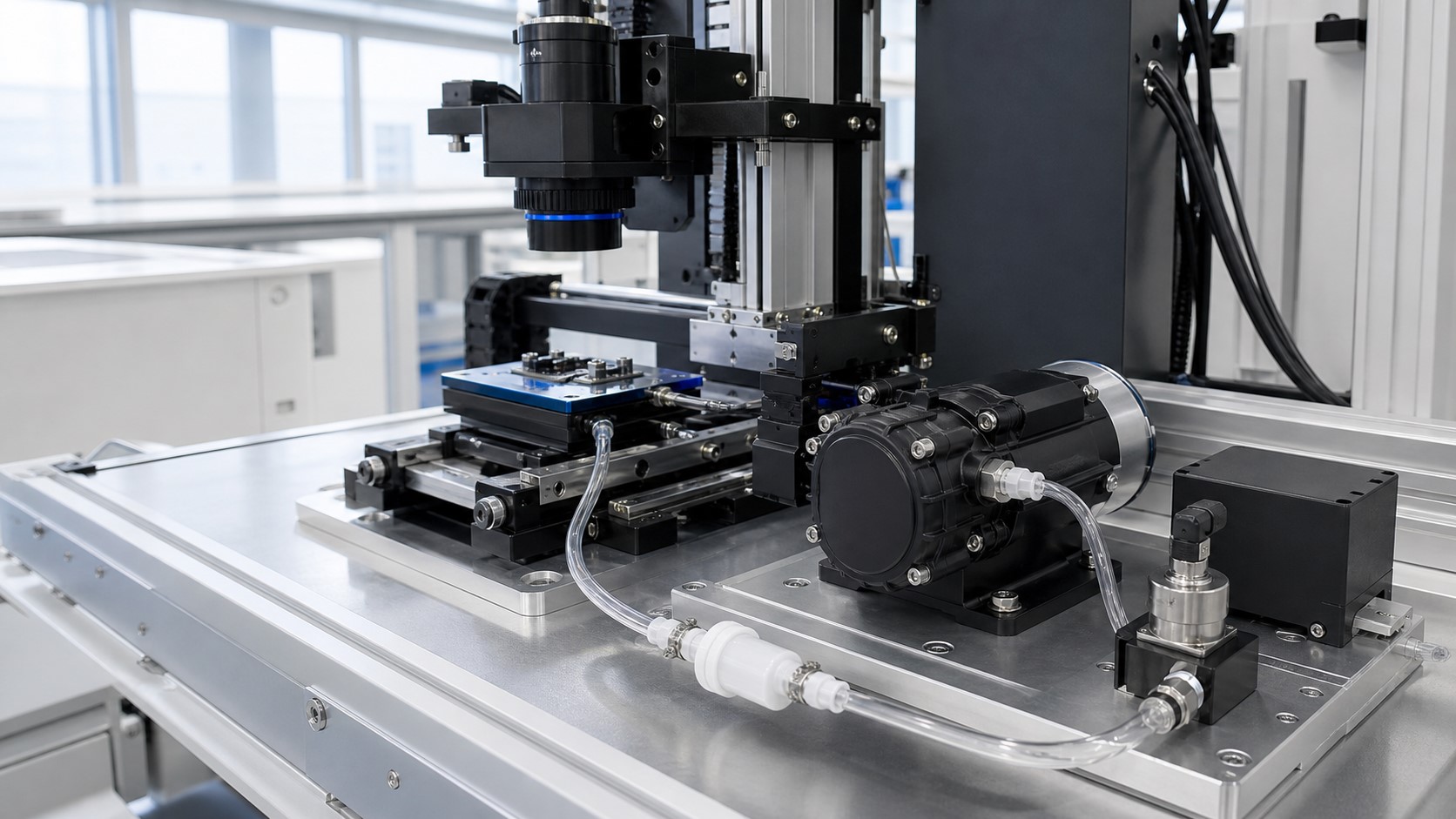
Separate holding force from evacuation speed
Holding force is driven by cup area, vacuum level, orientation and acceleration. Evacuation speed is driven by the volume of cups, manifolds and tubing plus leakage at the workpiece. A pump that reaches high vacuum slowly can still miss a short machine cycle.
For automated inspection, define the required vacuum switch point, the maximum time to reach it and the acceptable release time. This makes the pump, valve, filter and tubing choices part of one circuit decision.
Test the actual workpiece surface
Porous labels, textured plastics and small gaps can dominate the vacuum load. Bench tests should use real parts at low and high production tolerance, not only sealed test plates.
If multiple cups share one pump, record what happens when one cup leaks or misses the part. Check valves, vacuum-saving valves or separated channels may reduce the pump size needed for reliable pickup.
Frequently asked questions
Is higher vacuum or higher flow more important for pick-and-place?
It depends on the surface. Airtight parts need enough vacuum and fast evacuation; porous or leaking parts often need more flow to maintain usable vacuum.
Related products and engineering resources
Continue with the products, application material and engineering support related to this topic, or submit project conditions for a selection review.