
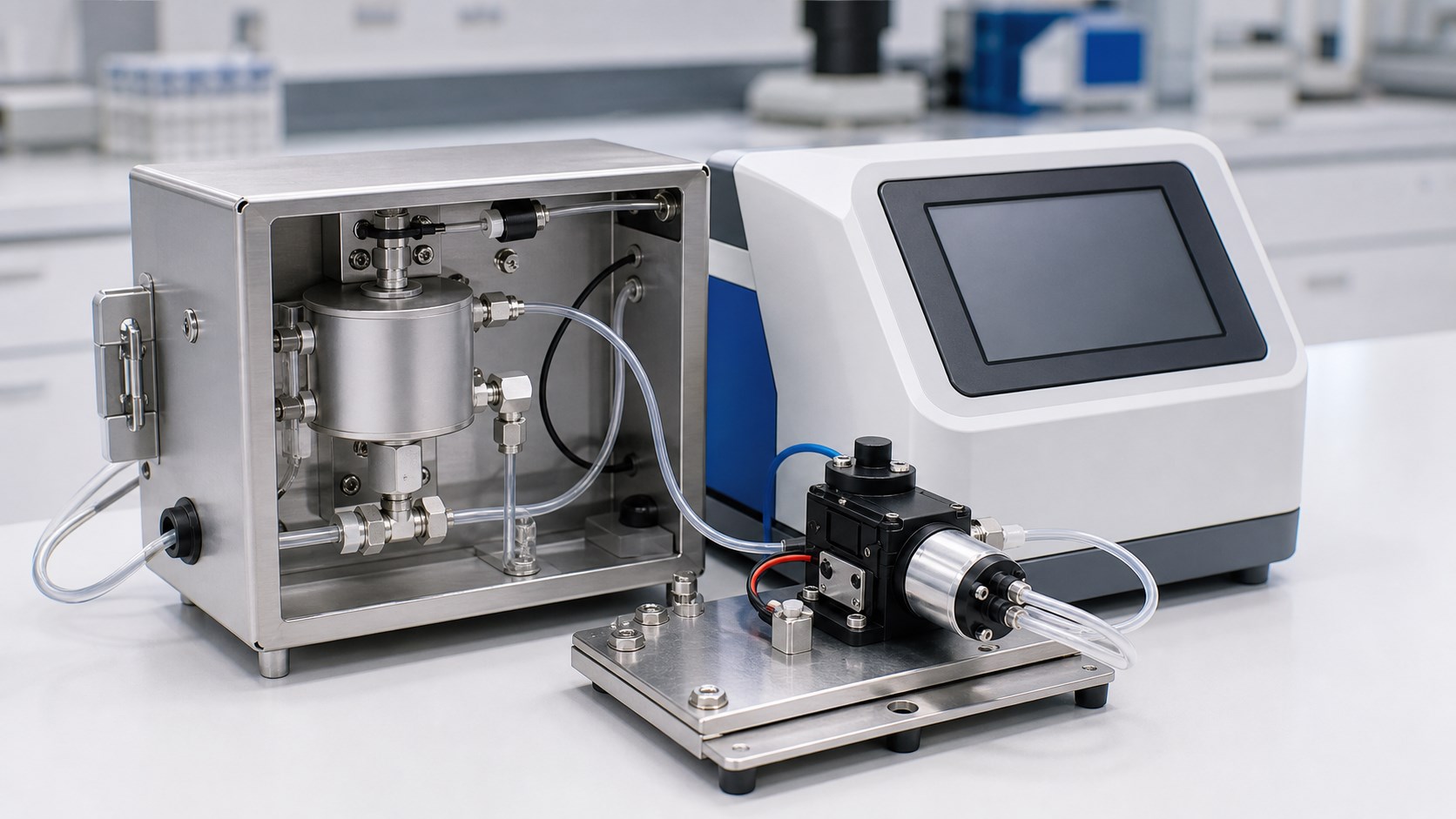
Define the loaded sample flow first
For gas sampling, the useful flow is the flow that reaches the sensor after the inlet probe, filter, tubing, chamber and outlet path are installed. Free-flow data is only a starting point because every restriction moves the pump to a different working point.
Before comparing models, record target flow, allowable response time, minimum vacuum at the pump inlet, filter life state, sample gas temperature and expected duty cycle. These values prevent an oversized pump from solving one problem while creating noise, heat and power issues.
Validate with dirty-filter margin
A clean filter may pass the target flow during prototype tests, but a loaded filter can raise inlet restriction quickly. The validation fixture should include a new filter, a loaded-filter equivalent and the final tubing length so the selected pump is checked across the real service window.
If the instrument reports concentration from a fixed sample volume, log flow stability over warm-up, continuous operation and restart after standby. Flow drift under these states is usually more important than a single maximum-flow number.
Frequently asked questions
Should a gas sampling pump be selected by maximum vacuum?
No. Select by the flow achieved at the actual inlet restriction, with enough vacuum margin for filter loading, temperature change and tubing tolerance.
Related products and engineering resources
Continue with the products, application material and engineering support related to this topic, or submit project conditions for a selection review.