
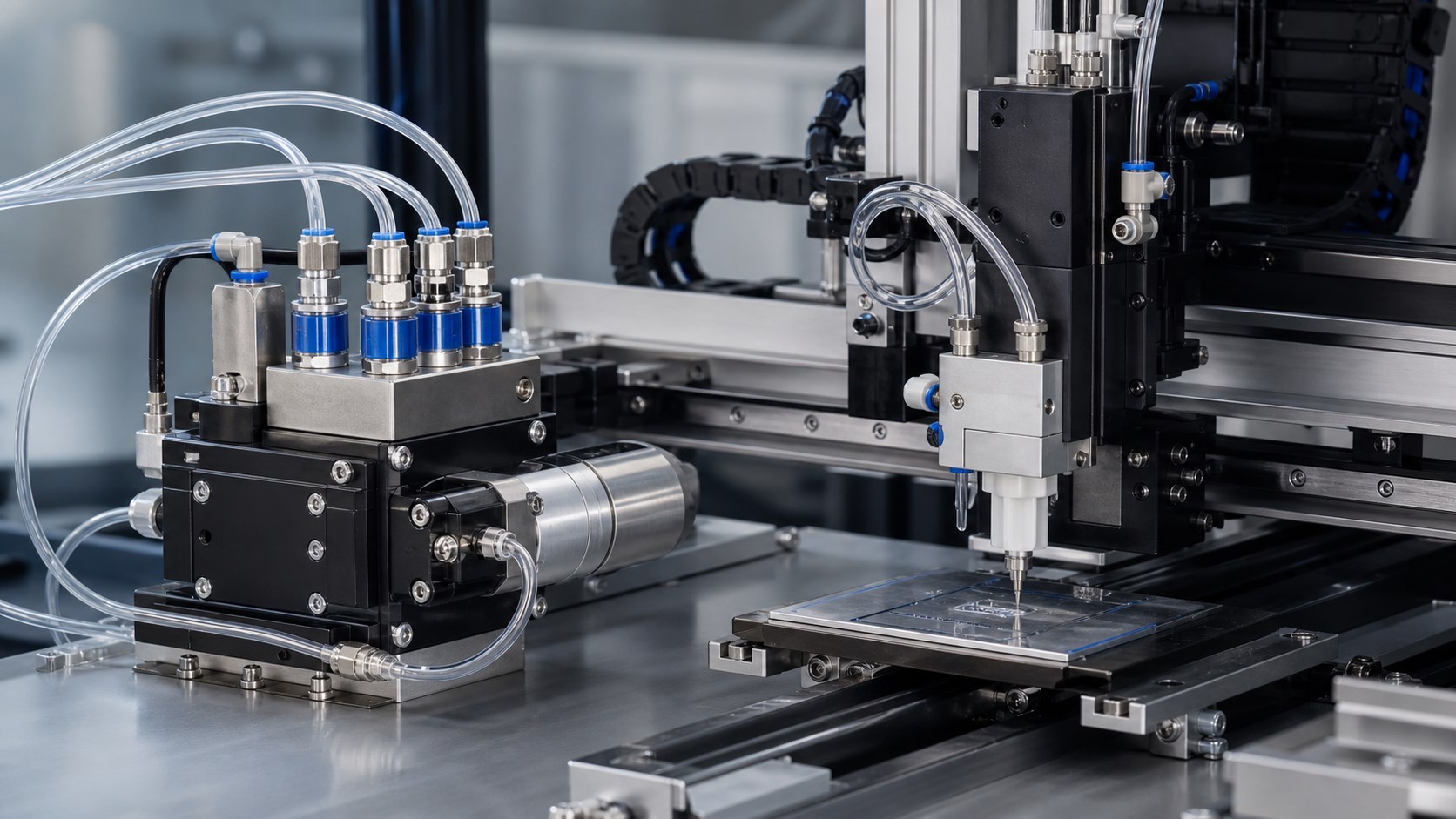
Review every wetted component
Ink and reagent projects should not qualify only the pump head material. Diaphragm, valve disc, valve seat, seal, port fitting and tubing can each become the weakest point when chemistry, pigment, solvent or temperature changes.
A compatibility review should include concentration, operating temperature, cleaning fluid, soak time and whether the liquid dries in the pump chamber during standby.
Control particles, viscosity and priming
Small valves are sensitive to pigment settlement and debris. If the fluid contains particles, specify filtration, flushing direction and allowable pressure drop before selecting the pump.
Viscosity changes the real flow at the same motor speed and back pressure. Prototype validation should measure cold start, warmed operation and restart after dwell, because these states expose most fluid-handling surprises.
Frequently asked questions
Can one micro liquid pump handle different inks?
Only after material and flow testing. Different pigments, solvents and cleaning cycles can change valve sealing, diaphragm life and tubing compatibility.
Related products and engineering resources
Continue with the products, application material and engineering support related to this topic, or submit project conditions for a selection review.